Tuesday, February 23, 2010

Reefton Spur

I have done two nice rides this week. Both half-days. On Sunday Fee and I went out on the bike. I did not take the camera, but we saw hot rods and a rockabilly band, Hells Angels, bulls fighting in a paddock, and winding quiet roads.

Yesterday I went riding with two friends, Marlon and James. We did a loop through the Black and Reefton Spurs. It was James' first time on the most famous and infamous motorcyling road in Australia - Reefton Spur. The Black Spur is wonderful, despite the fact we got stuck behind incompetent Sunday drivers.

Marlon and I have been discussing and improving our riding techniques of late, and through Reefton we kept up a fast pace, with him leading and me following James. We stayed together as a tight group. James' bike is small, under-powered in these conditions, with very poor suspension (making it hard to ride fast through corners on), and was running badly, back-firing constantly. Yet his fast lines through the corners were excellent and seemed effortless. I, on the other hand, was at times quite cautious. Going fast around blind corners worries me - is there a fallen tree? gravel? a truck? - and I had to constantly remind myself to relax and focus on riding well. It was as though I had a psychological brake on the whole time, which slowed me down and stiffened me up compared to James. I am sure he could beat me through these corners were we to race. Speaking to Marlon later, he felt the same as I. And yet he and I have much more riding experience than James, who is ten years my junior.  We also reflected on how we, ourselves, used to be as fast and effortless and fearless as James is, despite the fact we are now much more experienced and so, one would therefore assume, better riders. The difference is usually described as the younger having a foolish disregard for the dangers, and certainly the converse point - about an increasing sense of the risks with age - is true and was evident on this ride. But its something else, also. Something which is the kind of the same, and yet vitally different and positive. A person in their late teens / early twenties often has this fluid sense of limits, this unlimited feeling for extending their being which makes them capable of taking challenges with ease. A motorcycle seems the perfect tool or bodily extension for this free way of being, and it is beautiful to watch the easy gracefulness with which a young person moves with it.

We found an echidna along the way.


Above Marysville.


In Warburton; Marlon and James being mystical in a post-modern way.


Well (see below), James is mystical, while Marlon is post-modern (what with his duck-contemplation, opening up and questioning the space between, and perceptual access to, the intended object of his attention. Quack!).

Wednesday, February 17, 2010

Emu Flat

I spent this afternoon in a sweeping arc north of Melbourne: north to Yea via King Lake, to Seymour, Pyalong, Emu Flat, Kyneton, Trentham, Myrniong, and home via the Western Highway. I focussed on cutting graceful lines through the corners rather than slow-riding for scenery. I was struck by how much of riding is done by the hands. You turn corners by counter-steering: pressing on the handlebar in the direction you want to go. This turns the wheel in the opposite direction to the line of travel, which is counter-intuitive, but the sensation is very intuitive: you move your hands in your intended direction. My Honda is so quiet and smooth, and powerful. When I accelerate hard it sings a high "hummmmm" and hurtles into warp speed. I press forward now with one hand, now the other, and my motorcycle leans over, confident as I maintain the speed limit through corner after corner.

A brilliant sky and sun. Perfect!


The Honda's curves express the fluidity with which it slides through the curves of the road.


I explored a dirt road. The surface corrugations were a nightmare with my destructed steering bearings. But the bike took to the dirt well.


I stopped to look at abandoned homes, schools, and churches. Cool summer light was my company.


Taking the highway home from the West was an education in contrast: the landscape between Melbourne and Ballarat is a windswept vacancy of soullessness. Housing estates eat like cancer into the ugly hills and plains, where nothing grows because of the relentless high winds. Paddocks are not refreshing acres of nature, but sub-lots of grass of the sort you find in industrial places: fading ice-cream wrappers tangled in weeds. The grass looks poisonous in its odd green and the land seems in waiting to turn dark under a factory or parking lot. The aggressive almost psychopathic behaviour of a driver I encountered seemed of a piece with this blind ugly place.

But the city, as highway became freeway rising in looped super-structure, was beautiful in a concrete and metal way which the grassed hills previous to this lacked. Sound barriers hissed at me then shot upwards and away; tar curved in huge empty sweeps which I surfed with ease, even while feeling dwarfed. Massiveness became sublimity. Sublimity is beauty. This post-modern functional art has a eucharistic value for those who must drive in out of the western wastelands.

Wednesday, February 10, 2010

Marlon's SR520

On Monday night my friend Marlon invited me to ride his hopped up Yamaha SR400. You might recall that alongside the Hornet I own an SR500. Marlon had an SR400, and sent it to a specialist for a performance rebuild. That was in May; he just got it back. $5000 later it came out 520cc, with a new crank, carillo rod, performance cam for a low immediate powerband, exhaust, and a keihin carb. All made to work as a unit with proper testing. The bike was dyno'd before and after, and now produces twice the horse-power, with power that comes on just above idle, with a heavy thump, a much higher redline, and a lion's snarl when you ride hard. It is an utterly new bike, quite unlike the standard SR.

Yesterday we went for a ride. Mount Macedon, Daylesford, Maldon, Castelmaine and home. In violent storms.


Looking north, atop Mount Tarrengower above Maldon, at one of the multiple storm fronts


East


West


Tuesday, January 26, 2010

Clunes

I headed west into gold-field country last Friday, making for Clunes. A psychopathic bikie gang once pulled into this town:

Bikie: "We're here to meet a friend, coming in on the evening train."

Local: "There's nothing coming in on the train except some crates and a, uh, coffin.

Bikie (nodding slowly): "Our friend."


I rode through Daylesford, on back roads to Clunes; north to Avoca, Logan, then Maldon. I have added 11,000km of joy-riding to the bike since buying it three months ago.


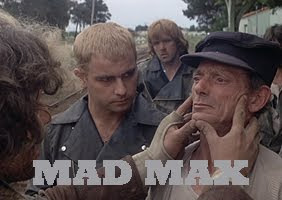
Below, the garage of the agent who signed the papers, releasing the “poor bastard” in the coffin. That was a rude thing for him to say, and The Toecutter is correcting him in the photo above: “His name is the Night-rider! Remember him when you look at the night sky.”


On the way to Logan a great wind arose, washing the paddocks in dust and felling trees.


The gold-fields area is a medley of shifting scenes, both natural and man-made, which I will explore in detail in the coming months. I've been reading travel-writing accounts from the 1880s of the towns here - from Cassell's Picturesque Australasia - and will draw on them when describing what I see. Such reading informs my experience of these places.

Saturday, January 16, 2010

Walhalla; Benalla and Whitfield

Last Sunday I did a 400km round trip to Walhalla, with my friend Rosy who rides a Virago cruiser. We went via Yarra Junction and Noogee, stopping at Moe on the way, and returned by the same route. Walhalla is a wonderful place.


Last Friday I went on a 600km ride with no destination. I went north from King Lake to Yea, to Bonnie Doone then Benalla. Across to Whitfield and down to Mansfield, on roads which were the highlight of the ride. Taking the Black Spur home, I arrived back at 10.30pm.


The GR650 sold on Thursday. Hours before the new owner was due to pick it up, while I was checking everything was in order, I dropped it on its side! I broke a bolt and ripped a set of electrical wires in half.

I am sorry to see that bike go. For all its competence, the Hornet is too much of a sports bike for me.

Wednesday, January 13, 2010

The Rider

In his tent the man woke early. The sound of the breeze through scrub had entered his sleep. When he emerged the first thing he saw were low salt bushes. At this hour the air was pure and cool, though a spill of red against the morning sky warned of the day's heat. Beneath it, the desert stretched out: between bushes, a salty ochre soil which had been so pink at yesterday’s dusk. The world eased itself onto the man's senses. His motorcycle was still standing as he left it, and no park ranger had come to move him on. He stretched his muscles and felt the dawn, cool against his bare skin. The world felt like a place of promise.

Promise was not the word to describe how this man had about life until now. He had tried to go steady with a girl, and took it that she had left him because, like those around him, he had so little. They asked him every time: What's your job? He would mumble something embarrassed about his unemployment. And what job would he find beyond more drudgery and more secret despair?  He feared that the terrible feeling would only stop when something precious in him died. The others didn't seem to mind. Or if they did mind, they seemed to have successfully made themselves hard, as if to match the world's hardness. Of course it slowly won, it slowly wore them down, but beer, sex and cars seemed enough to console them - or so they boasted. He would lie half asleep and imagine he was an artist. It wasn't the fantasy of being seen and applauded. Rather, he dreamed of immersing himself in rhythm and colour. In words. In emotion.

“You've missed that tram” he would tell himself in the daylight, during those despondent afternoons when the bored sunlight drained him of feeling. Then he would search about in his mind for what might be within reach, for that existence he dreamed of when half-conscious on the mattress. He had reached manhood, but he was still very young: he was at that age when you feel angry at what little others have become, but the anger is really fear for yourself.  Fear that you, too, will inevitably become the same. He was young and uncommitted enough to feel, somehow instinctively, that with enough anger and kicking he might stop himself being swallowed up. He found some cash-in-hand work. He bought himself a motorcycle.

The BSA Spitfire was not very old – 1966 – but it had been crashed more than once and rebuilt in back yards. The chrome twin exhausts were scratched and rusty. Someone had removed the 'street racer' carburettors, no doubt for their own bike, replacing them with a mild pair. At least it was now easier to start. And the bike still burbled beautifully.  At hard revs it made him think of its name-sake - a WW2 Spitfire.  And it was claimed to produce 54hp, which earned respect in anybody's book. Over that gloomy unemployed winter the young man had learned to service and tune the eight-year-old motorcycle. The friend of a friend who sold it to him invited him over a few times - he was only one suburb away in Altona – and had tutored him in this. He learned to repair the bike's inevitable faults, which mostly consisted of electrical failures and flooding petrol. Then chance had made him do these things by the roadside on his own, sometimes at night. He came to know the machine and became vaguely proficient at keeping it on the road.

Riding the motorcycle aroused feelings which reminded him of his half-conscious yearnings at night. Here too he was immersed: in beauty, sound, colour, rhythm, as well as chill and warmth and so many other sensations. He was set free. Fears and depressions fell away as some animal side of him was liberated, as though to teach him what it knew of existence. Riding one night on the opposite side of town, he crested the hill on Punt Road and in motion he looked out over the clock and the M.C.G. Balmy air flowed in waves across his skin. From that crest the road suddenly descended and curved to the left. He felt air-born for a moment, and continued to feel in flight during the descent, still looking across the Yarra at the city lights. He did not want that momentum ever to end. Somewhere inside a decision was made that it never would.

With some money he had saved after buying the bike, with a tent and old army bag of possessions tied down on the rear part of the bike's seat, the young man left Melbourne one morning and rode north-west. He was led by whatever shape looked interesting on the map. He did not know where he was going or what he would do, trusting only in his youth and in the fact that, while behind him there was nothing for him, yet he could not be sure what lay ahead

Wednesday, December 30, 2009

Nyah, Christmas, and the Hay plains

My hometown, insofar as I have one, is Nyah, in north-western Victoria. 'Nyah' is Aboriginal for 'this bend', which was the name the local Aborigines gave to the place where the township of Nyah was later founded. Nobody knows what was so significant about this bend.

With white settlement, the town was reportedly begun as a socialist experiment: the Taverner Community Village Settlement. Or so says Wikipedia. The official history of the town, On This Bend of the River, was written by my pre-school teacher Grace Willoughby, but it mentions nothing of socialism.

Despite its biases and terrible punctuation(!!!), Grace's book is a wonderful example of that genre amateur local history, where local constables "Rob Dailey and John MacIntyre", rather than "two policemen", intervene. That is, where individuals with names populate the landscape. This is apt in an Australian - and so hopefully egalitarian - history. Let the English have two policemen and four stable-hands, namelessly serving their importantly named aristocrats! Grace's history draws on stories and memories. It is the vernacular history of real people, which is all there is to Nyah.

On Christmas Eve I had lunch with my partner's parents at Woori Yallock. At 3pm I left for Nyah, aiming to head north to Yea, Seymour, then to choose a route according to the time and weather. It rained for this first half of the journey, through twisty mountains which I had looked forward to carving at speed with my new tyres. On the Melba highway, at 4pm, the second car in front of me hit a kangaroo at 100kph. This set the tone for the ride until Bendigo - I entered into survival mode, scanning the roadside and caring doubly about the wet.

Chum Creek Road


South of Bendigo. This tree was so full of cockatoos it seemed to bear white mangoes. Most flew away as I retrieved my camera.


Having left Bendigo, the road straightened out and the sky became epic - the great Mallee! My clothes dried and my mind settled on the horizon, as my body was immersed at speed in the glow of the temperate afternoon.


The next morning my partner and I had breakfast on 'this bend'. 


My mum's home, sunk in native and foreign foliage ruled by unkempt roses.


Nyah's race track and football ground, backing on to the Nyah forest, with its Aboriginal canoe trees, Bunyip holes, and burial mounds. That forest is as most were in 1788; not dense as people tend to imagine, but open and sparse, due to the continual burning-off by local Aborigines for the sake of easy hunting and living, and through the behaviour of native plants and animals before new species upset the old patterns. The accounts of early settlers across mainland Australia consistently describe our bush as like an English parkland, with a few trees to the acre, and an easy view for at least a mile. When you walk through the Nyah forest, you realise what a wonderful thing we have lost.


The Murray.


While at the Tooleybuc Club for tea, I saw a photo of The Ring Tree, a local thing of note. Here it is, in its naked impressiveness. This was Tuesday morning, as I headed north to Balranald, having decided, despite the high Mallee temperature, to take the long way home and visit the Hay plains. The road you see here is behind Nyah, between Koraleigh and Tooleybuc, and is one of my favourites.


At Balranald I joined the Sturt Highway. I have been reading Sturt's Narrative of an Expedition into Central Australia, the journal and report - which is also a fine piece of literature - of his attempt to determine whether or not there was an inland see on the continent, and to be the first European to stand in the very centre, which he failed to do by 90(?) miles. His horse-drawn dray bearing a wooden boat proved useless in the Simpson Desert. This picture was taken about 20km east of Balranald, when I stopped to photograph emus.


You can see more of them in paddock below. One of my earliest memories is of my dad bringing the ute to a sudden stop. He reached behind the seat for his rifle, and told me to stand by the roadside. He then jumped a ditch which I feared, from my perspective as a small child, would swallow him in its deep water, and took aim. In the paddock emus were running abreast in a long line, which seemed to pivot on us like the hand of a watch on its centre. Dad brought one down. Next I remember him cutting the thing open on the kitchen table, and seeing the orange hue of its flesh. As with anything he shot - I never once saw him shoot an animal except for food or out of pity - Dad meant for us to eat the emu, but its flesh was diseased. Apparently Mum was ill at the time. I do not remember it, but she says she walked out, saw the corrupt meat, and became a vegetarian for several years following.


Despite the beautifully empty landscape I did not stop again until Hay, where I had lunch. My reason for not stopping was, to be honest, anxiety. It was almost forty degrees under a fiery sky, and there really was nothing for 125km. The entrance to an unseen homestead wore the name Hell's Gate. It seems silly when writing or reading this in the comfort of that long suburb called Victoria, and without a vicious sun overhead, but I feared what might happen if I could not restart my motorcycle. It will be interesting to return in Winter and gain a less oppressive sense of the emptiness.

South of Hay, the emptiness was even more extreme (though there were three civilised places, including a pub, in the 125km to Deniliquin), and the Earth, which was flat and treeless in every direction, seemed constantly to rise before me even though I knew all was on a level. It was an illusion created by the extremity of absence.


This artwork commemorates the 19th century headless horseman who, in this area, would terrorise drovers, causing the cattle to stampede. It was thought that he was the ghost of a dead drover until perchance the apparition was caught. He turned out to be the butcher at Moulemein, who would help himself to the subsequently scattered stock!


An eagle's nest where trees are scarce.


This Kangaroo's face bones were smashed. It had managed to move ten meters from the road, where it died.


And still the road goes on.


Deniliquin, Echuca, Rochester, the land became more green. And yet this Victorian lake remains barren.


I arrived home tired, having spread my body and mind over a larger than hitherto part of the country.